
Higher Throughput
Distributed storage removes a major limit on individual partition performance.
Learn MoreBuilt for high throughput, low latency, and operational simplicity—without requiring applications to abandon the Kafka ecosystem.
By rethinking the relationship between compute, storage, and streaming workloads, Fusion creates new opportunities for performance and efficiency.
Distributed storage removes a major limit on individual partition performance.
Learn MoreAn optimized data path is designed for fast, durable event delivery.
Learn MoreIndependently scalable resources and automated recovery reduce operational complexity.

Traditional Kafka architectures tightly couple compute and storage. Brokers both serve application requests and maintain local copies of partition data, tying storage capacity and performance to the machines responsible for processing each partition. Fusion separates these responsibilities.
A horizontally scalable tier that handles Kafka protocol operations.
A completely independent tier that manages durable stream data.
Scaling
Brokers don't own durable partition data, so they can be added, removed, or replaced without relocating entire partition logs.
Leadership
Partition leadership is dynamically distributed across the active broker fleet.
Reads
Brokers keep an in-memory cache to accelerate reads, while distributed storage remains the durable source of truth.
Recovery
When a broker fails, its partitions are reassigned to healthy brokers. Because durable data resides in the independent storage tier, partition recovery does not require relocating log data.
The Result
A system designed to adapt to changing demand and recover from failures with substantially less operational complexity and greater operational efficiency.
In conventional Kafka deployments, each partition is stored on a small number of brokers, limiting performance to the capabilities of those machines and their disks.
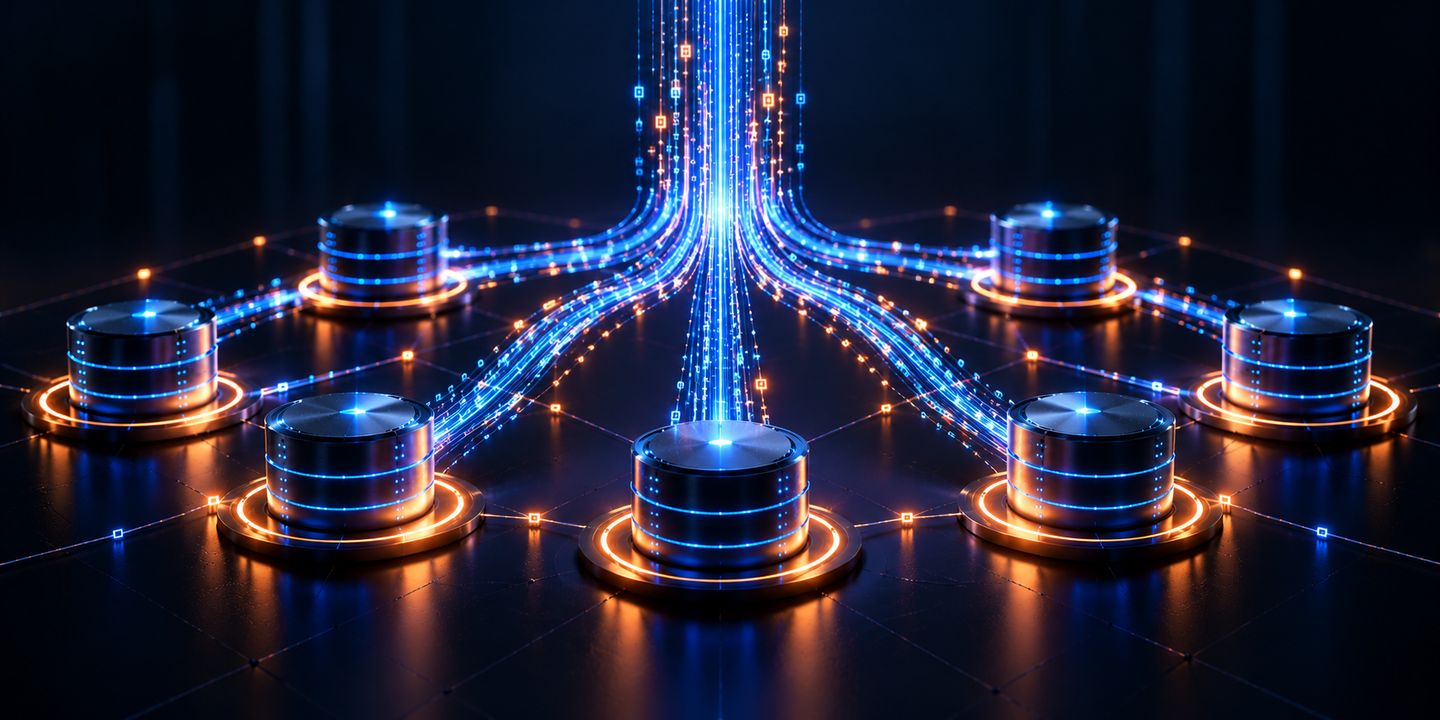
Fusion takes a different approach. By distributing each partition's data across many storage nodes, Fusion spreads I/O demand throughout the storage fleet rather than concentrating it on a handful of machines. This eliminates the conventional storage bottleneck associated with hot partitions and allows storage throughput to scale with the size of the fleet.
Traditional Kafka
Brokers serve application requests and keep local copies of partition data, so storage is tied to the machines processing each partition.
Atomic Fusion
A horizontally scalable broker tier handles the Kafka protocol, and an independent storage tier holds durable stream data. Each grows on its own.
Traditional Kafka
Each partition is stored on a small number of brokers, so performance is limited by those machines and their disks.
Atomic Fusion
Partitions are split into small segments spread across many storage machines, giving uniform I/O and much higher aggregate capacity.
Traditional Kafka
Data is organized around large broker-local logs.
Atomic Fusion
An underlying transactional, byte-addressable storage engine supports atomic appends, random reads by byte offset, and efficient trimming of retained data.
Traditional Kafka
Redistributing existing workloads or retiring brokers typically requires relocating partition replicas, consuming network bandwidth and storage resources.
Atomic Fusion
Brokers hold no durable partition data, so they can be added, removed, or replaced without relocating partition logs.
Traditional Kafka
Leadership transfers to a surviving in-sync replica. Restoring replication redundancy requires copying partition data to another broker.
Atomic Fusion
Leadership transfers to a surviving broker. Replication is unaffected. Capacity is restored without moving a single byte.
Fusion is designed for durability from the moment data is written. Successful write acknowledgements are returned only after data has been durably persisted in at least two of three separate availability zones. This approach combines synchronous durability with a distributed architecture designed to tolerate infrastructure failures.
Explore Reliability