Defining the Modern AI Agent
- Dan Lohmeier
 Dan Lohmeier
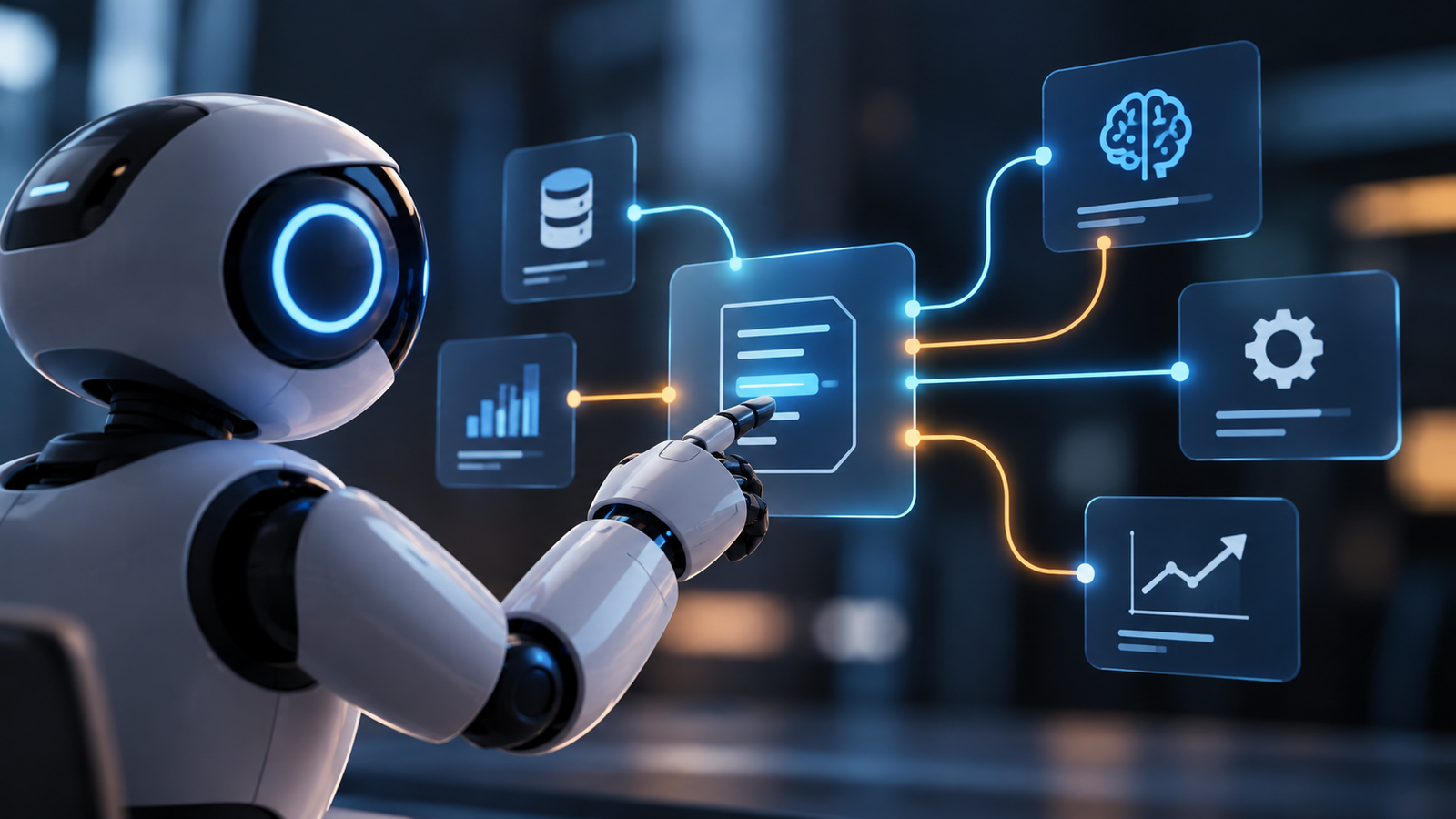
Understanding Agentic Capabilities and Architectures
In contemporary computing, an artificial intelligence agent is more than just a piece of software; it is a system designed to operate with a degree of sophistication that mimics cognitive behavior. While standard applications follow linear scripts, AI agents utilize a specific set of pillars to navigate complex environments and achieve objectives.
Foundational Characteristics
To qualify as an agent, a system must move beyond simple execution and demonstrate several key traits:
- Self-Governance (Autonomy): Agents operate independently. They are designed to manage their own tasks and execution paths without needing a human to guide every individual step.
- Environmental Awareness (Reactivity): A primary requirement is the ability to sense and respond to external stimuli in real time. Whether it is a cybersecurity tool detecting a breach or a chatbot interpreting a customer’s tone, the agent must adjust its behavior based on incoming data.
- Target-Driven Initiative (Proactivity): Agents do not just wait for triggers; they take initiative. They are programmed with specific end-goals and will actively seek out methods to reach those milestones.
- Interoperability (Social Competence): Effective agents must be able to communicate within a digital ecosystem. This involves collaborating with human users, other AI entities, or integrated software services—such as a personal assistant coordinating directly with a logistics API.
Classification by Decision Logic
Agents can be categorized by the internal logic they use to process information and make choices. This taxonomy ranges from basic reactionary models to complex optimization engines.
| Agent Category | Operational Logic | Key Strength |
|---|---|---|
| Simple Reflex | Relies strictly on "if-then" rules based on immediate input. | High speed and efficiency for routine tasks. |
| Model-Based | Maintains a memory of the environment and past states. | Contextual awareness and tracking of history. |
| Goal-Based | Prioritizes actions that lead toward a defined objective. | Advanced planning and outcome prediction. |
| Utility-Based | Evaluates different paths based on a "quality" or "satisfaction" score. | Maximizes performance and efficiency outcomes. |
Summary of Agent Types
- Simple Reflex Agents: These are the most basic form, making decisions purely on current perceptions. While they lack the ability to consider history, they are exceptionally fast at executing predefined responses.
- Model-Based Agents: These systems are more sophisticated because they maintain an internal "worldview." By keeping track of past inputs and changes, they can make decisions that factor in context that is no longer visible.
- Goal-Based Agents: These entities are focused on the "why." They use algorithms to search for and plan the most effective sequence of actions to fulfill a specific mission, often simulating various scenarios before acting.
- Utility-Based Agents: These agents provide the highest level of nuance. Instead of just meeting a goal, they look for the best way to meet it, weighing different states against a performance measure to ensure the most "satisfactory" result is achieved.
Deployment and Operational Considerations
Deploying sophisticated AI agents into real-world environments requires meticulous planning regarding data handling, infrastructure, and autonomy levels.
- Data Foundation: The effectiveness of an AI system hinges on the quality of its training data, requiring large, diverse datasets that accurately mirror real-world conditions for applications like autonomous vehicles or customer support. Furthermore, designing robust data pipelines is crucial for the low-latency collection, cleansing, and transmission of this representative data.
- Autonomy and Safety: A core design decision involves defining the level of human involvement. In safety-critical sectors, such as healthcare, implementing a 'human-in-the-loop' mechanism is necessary to validate AI decisions and serve as a crucial safety net, contrasting with full autonomous deployment.
- Infrastructure and Performance: Deployment necessitates significant computing power, driving the need to select appropriate architectures (cloud, edge, or hybrid) based on required latency, scalability, and performance. For agents relying on real-time sensor inputs (telemetry) or high-volume event analysis, ensuring high-throughput, low-latency data streaming and processing is paramount.
Platforms optimized for fast and reliable event streaming, such as Atomic Fusion, are vital for these heavy workloads. For example, a cybersecurity agent can use Atomic Fusion to analyze network logs in real time to detect and contain anomalies rapidly.